The Physics of Stress
We tend to think of stress as a psychological problem ("I am worried about my deadline"). But to your body, stress is a physiological state defined by the accumulation of Carbon Dioxide (CO2). When you get anxious, your breathing becomes rapid and shallow. You fail to exhale fully. As CO2 levels rise in the bloodstream, it triggers the amygdala (fear center) to increase agitation. It is a vicious loop.
The Anatomy: Alveoli
Your lungs are not just two big bags; they are filled with millions of tiny, balloon-like sacks called alveoli. This is where oxygen enters the blood and CO2 leaves.
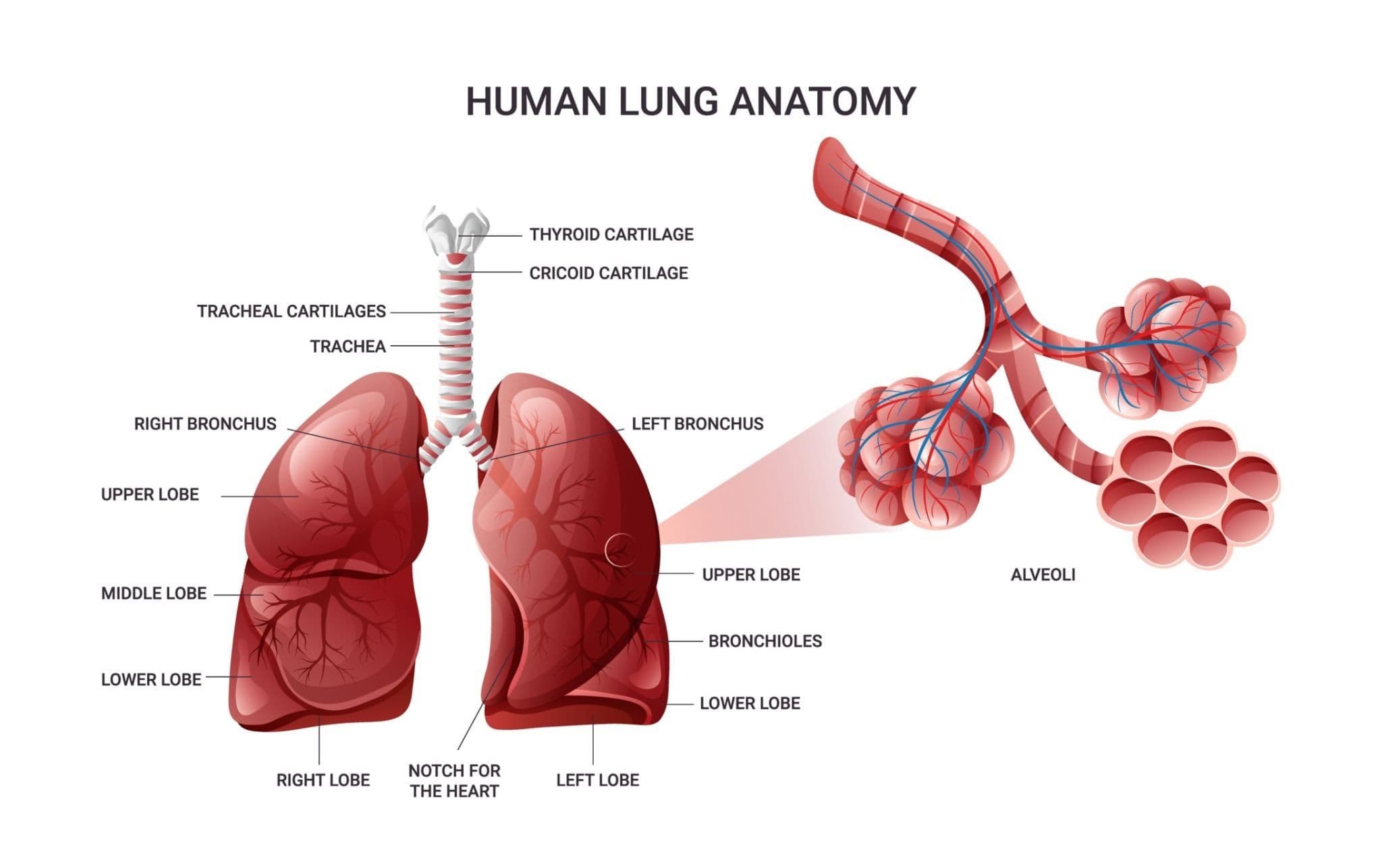
When you are stressed or have been sitting for a long time, these wet little balloons tend to collapse and stick together (atelectasis). When they collapse, they trap CO2 inside.
The Solution: The Double Inhale
To offload the stress (CO2), you first need to re-inflate the balloons. This is where the Physiological Sigh comes in. It consists of a specific pattern: Two Inhales followed by one long Exhale.
- The First Inhale: You breathe in through your nose, filling the lungs normally.
- The Second Inhale: You take a sharp, quick second inhale on top of the first one.
- The Mechanism: This second intake of air increases the pressure just enough to "pop" the collapsed alveoli open. It restores the surface area of the lungs.
- The Exhale: Now that the sacs are open, you exhale slowly through the mouth. Because the surface area is maximized, you offload a massive amount of CO2.
The Evidence: Stanford 2023
In a randomized controlled trial published in Cell Reports Medicine, researchers at Stanford (including Dr. Andrew Huberman) compared different breathwork techniques over 28 days. They tested:
- Cyclic Sighing (The Physiological Sigh).
- Box Breathing.
- Cyclic Hyperventilation (Wim Hof style).
- Mindfulness Meditation.
The Result: The Physiological Sigh was the most effective at improving positive affect (mood) and lowering respiratory rate. Crucially, it worked faster than meditation because it is a mechanical intervention, not a cognitive one.
The WellFact Protocol
You do not need to sit in a lotus position for 20 minutes.
- When: Anytime you feel your heart rate spike or your chest tighten.
- How: Inhale (Nose) -> Inhale again (Nose) -> Long Exhale (Mouth).
- Reps: Repeat this 2 or 3 times. Physiological data shows that 2-3 cycles are often enough to bring the heart rate back to baseline.